Before Placing A Trade: What To Look For In A Crypto Trading App
A trade crypto app can make it easier to access digital-asset markets, review prices, place orders, and monitor holdings from a mobile device. Users who want to trade bitcoin or other supported crypto assets should still evaluate the platform carefully before depositing money. Crypto markets can move sharply in either direction, and convenient access does not reduce the underlying risk of loss.
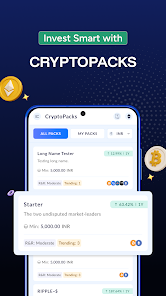
The quality of a trading app depends on more than its interface. Users should consider account security, supported assets, liquidity, fees, order controls, withdrawal options, and how clearly the platform communicates trading risk.
Begin With The Purpose Of The Account
Before selecting an app, users should decide what they actually plan to do.
Some may want to:
- Buy and hold selected crypto assets
- Make occasional trades
- Monitor market prices
- Build a small diversified crypto allocation
- Learn how digital-asset markets operate
The intended use affects which features matter most.
Someone making occasional purchases may value simplicity, while an active trader may pay more attention to liquidity, execution speed, and advanced order types.
Security Should Come Before Convenience
A trading platform may hold both personal information and digital assets.
Users should review available security features such as:
- Strong authentication
- Device verification
- Login alerts
- Withdrawal controls
- Account recovery procedures
The user also has responsibilities.
Passwords should be unique, authentication details should not be shared, and suspicious links or messages should be avoided.
A fast login experience should never come at the expense of account protection.
Understand Where Crypto Assets Are Held
A trading app may provide an integrated wallet or another mechanism for holding supported crypto assets.
Users should understand:
- Whether assets remain on the platform
- How withdrawals work
- Whether external wallet transfers are supported
- What network-related fees may apply
Custody is an important part of crypto investing.
Users should know who controls access to the assets and what options exist if they want to move them elsewhere.
Check Which Assets And Trading Pairs Are Available
A platform may support many crypto assets, but quantity alone does not determine quality.
Users should evaluate:
- Which assets are listed
- Whether the desired trading pairs are available
- How liquid those markets are
- Whether the assets fit their risk tolerance
Smaller or less liquid tokens can experience larger price swings and wider spreads.
Availability should not be treated as a recommendation to trade.
Liquidity Affects Trade Execution
Liquidity describes how easily an asset can be bought or sold without a large difference between expected and actual price.
Low liquidity can lead to:
- Wider spreads
- Slippage
- Difficulty exiting large positions
This can become particularly important during periods of high volatility.
Users should understand that the displayed market price may not always be the exact price at which an order is executed.
Review The Fee Structure Before Trading
Trading costs can reduce returns, particularly for users who trade frequently.
Possible costs may include:
- Trading fees
- Deposit-related fees
- Withdrawal fees
- Network charges
- Spread between buy and sell prices
A platform with a simple interface can still become expensive if trading costs are high.
Users should review applicable fees before placing repeated trades.
Understand The Difference Between Order Types
Some trading apps may support multiple ways to place an order.
Common examples can include:
- Market Orders
These are generally designed to execute quickly at available market prices.
The final execution price may differ from the price first displayed, especially during volatile periods.
Limit Orders
These allow users to specify a price at which they are willing to buy or sell.
Execution is not guaranteed if the market never reaches that level.
Understanding order behavior can help users avoid unexpected results.
Do Not Trade More Because The App Makes It Easy
Mobile access can encourage frequent activity.
Users may start reacting to every price movement simply because the market is available throughout the day.
Frequent trading can increase:
- Transaction costs
- Emotional decision-making
- Exposure to short-term volatility
A useful app should support a strategy rather than create one.
Users should decide their approach before opening a trade.
Set A Clear Risk Limit
Crypto markets can experience significant price changes.
Users should decide in advance how much capital they are willing to expose.
A practical risk limit can consider:
- Total savings
- Emergency funds
- Existing investments
- Income stability
- Ability to tolerate losses
Crypto should not require money needed for rent, bills, debt repayment, or emergencies.
The amount invested should be affordable to lose without disrupting essential finances.
Avoid Using Borrowed Money
Borrowing to trade crypto can significantly increase financial risk.
The loan repayment remains fixed even if the asset falls sharply.
This can create two simultaneous pressures:
- Market losses
- Debt obligations
Crypto trading should ideally use surplus capital rather than borrowed funds.
High volatility and fixed repayments are a difficult combination.
Keep Short-Term Trading Separate From Long-Term Holdings
Users may have different reasons for owning crypto.
Some positions may be intended as longer-term holdings, while others may be short-term trades.
Mixing these approaches can create confusion.
A trader may hold a losing position longer than planned by suddenly calling it a long-term investment.
Clear rules can help distinguish:
- Trading capital
- Long-term allocation
- Emergency funds
Each should serve a different purpose.
Track Transactions And Performance Carefully
A trading app can generate a large number of transactions over time.
Users should maintain visibility into:
- Purchase prices
- Sale prices
- Fees
- Quantity held
- Realized and unrealized gains or losses
This helps provide a more realistic picture of performance.
Looking only at the current portfolio value can hide the effect of frequent trading costs.
Do Not Chase Sudden Price Spikes
Sharp price increases can create fear of missing out.
Users may feel pressured to enter after a large move.
This can lead to:
- Buying at elevated prices
- Over-allocation
- Emotional trading
A better approach is to follow a predefined plan.
The fact that an asset has recently increased does not mean the trend will continue.
Be Prepared For Fast Market Reversals
Crypto markets can change direction quickly.
An asset that rises sharply may also fall sharply.
Users should be prepared for:
- High intraday volatility
- Sudden liquidity changes
- Unexpected news-driven moves
This is why risk management matters more than short-term predictions.
No app can remove market risk.
Review Withdrawal Processes Before You Need Them
Users should understand how to move funds before a situation becomes urgent.
Useful questions include:
- How are crypto withdrawals requested?
- How long can processing take?
- What fees apply?
- Are withdrawal limits in place?
Learning this process before depositing significant funds can prevent surprises later.
Protect The Device Used For Trading
The phone itself is part of the account-security system.
Users should maintain:
- Screen lock
- App authentication
- Updated software
- Controlled physical access
Trading from a compromised device can expose sensitive information.
Public or unsecured networks should also be used cautiously for financial activity.
Keep Market Information In Perspective
Trading apps often display:
- Price charts
- Market movers
- Percentage changes
- Trending assets
This information can be useful, but it can also encourage reactive decisions.
Users should avoid interpreting short-term price movement as proof that an asset is likely to continue in the same direction.
Market data should support analysis rather than replace it.
Use The Platform As An Execution Tool
A cryptocurrency trading platform can provide access to digital-asset markets, but successful use still depends on disciplined risk management, cost awareness, secure account practices, and a clear trading plan.
The app handles execution. The user remains responsible for deciding when, why, and how much to trade.
Conclusion
A trade crypto app can make digital-asset markets easier to access, but convenience should never be confused with lower risk.
Users should review security, liquidity, fees, custody, supported assets, withdrawal processes, and order types before trading. They should also keep emergency funds and borrowed money separate from crypto capital and avoid making decisions based solely on short-term price movements.
The strongest approach is to treat a crypto trading app as a tool for executing a defined strategy while keeping risk limits, security, and financial discipline firmly in place.